
Essential TEFL — Teacher Training Bangkok
Phonics is an important part of teaching English to young learners. If you are going to teach in a kindergarten, primary school or international school, you are likely to come across phonics in lessons, reading books, classroom activities and school reading programmes. At Essential TEFL, we cover phonics as part of our classroom teacher training in Bangkok.
Phonics teaches children the relationship between the sounds they hear and the letters or groups of letters they see in written English. Two terms come up immediately.
A phoneme is a sound.
A grapheme is a letter or group of letters used to represent that sound.
Take a simple word such as cat. A child learns to recognise the sounds represented by the letters c, a, t and then bring those sounds together to read the word. This relationship between sounds and letters is at the centre of phonics. Systematic phonics teaching introduces these relationships in a planned sequence, moving from simpler sound letter relationships towards more complex ones.
For English language learners, this is particularly useful because English spelling and pronunciation do not always match in the way a new learner might expect. Think about these four words:
The spelling pattern looks similar, but the pronunciation changes. A TEFL teacher therefore needs to become aware of the difference between the English we see written down and the English we actually hear and speak.
Many people starting a TEFL course expect to teach vocabulary, grammar and conversation. If you teach young learners, the job can involve much more than that.
A school may expect you to teach letter sounds, CVC words, spelling, reading and pronunciation. You may use phonics readers, sound cards, magnetic letters and worksheets. Structured phonics programmes are an established part of literacy teaching in British, American, bilingual and international schools and can be incorporated into EFL teaching.
Knowing the basics before you enter the classroom makes a considerable difference.
► View the TEFL CourseTwo of the most important skills in early phonics are blending and segmenting. They work in opposite directions.
Blending is used for reading. A learner sees a word and brings its individual sounds together:
d – o – g → dog
The child is not simply memorising what the word dog looks like. They are using their knowledge of sounds and letters to decode it. As children become more confident, the separate sounds are blended increasingly smoothly until recognising the word becomes much quicker.
Segmenting is particularly important for spelling and writing. The teacher says pig. The learner breaks the word into its individual sounds:
pig → p – i – g
They can then identify the letters needed to represent those sounds.
In systematic synthetic phonics, these processes are deliberately connected: children blend phonemes to read words and segment spoken words into phonemes when spelling.
CVC means Consonant, Vowel, Consonant. CVC words are useful when children are beginning to blend and segment because their structure is relatively straightforward.
Classroom Activity
The teacher says a word such as dog. The child listens for the three sounds and can use their fingers to identify each one before selecting magnetic letters or writing the sounds into the boxes. The child has to listen to the word, identify the individual sounds, connect those sounds with letters and then construct the written word. This is the sort of activity that makes much more sense once a trainee understands what the child is actually learning.
English phonics quickly becomes more complicated than one letter representing one sound.
A digraph is two letters representing one sound.
This distinction matters when teaching children to segment words. Teachers need to think about the sounds in a word rather than simply counting the letters. Current guidance for systematic synthetic phonics emphasises a clear progression from simpler to more complex grapheme phoneme correspondences.
Children will also encounter words that cannot yet be completely decoded using the phonics they have learned. These are often called tricky words or common exception words. Rather than asking children to memorise every unfamiliar word as a complete shape, the teacher can help them identify the parts they can decode and the part that is unusual or has not yet been taught.

Learning individual sounds is only the beginning. Children need opportunities to apply what they know when they read. A decodable reader is written so that most of the words contain sound letter relationships the child has already learned. This allows the learner to practise decoding rather than relying on pictures or guessing unfamiliar words.
Being able to pronounce every word on a page does not necessarily mean a child understands what they have read. Phonics gives children a way to decode written language. Reading then develops further through fluency, predicting, sequencing, retrieving, summarising and inferring.
Phonics is concerned mainly with the relationship between sounds and written letters.
Phonology is broader. It looks at how sounds work within spoken language.
For a TEFL teacher, phonology includes individual English sounds, word stress, sentence stress, intonation and connected speech. Students are not only learning to read English. They need to understand and speak it.
English words have stress patterns. In a word containing more than one syllable, one syllable may be more prominent than the others. New teachers do not always notice stress because they use it naturally themselves. Once you begin teaching English, you need to become much more conscious of things you previously did without thinking.
The word a speaker stresses can tell the listener which information is important. Stress carries meaning. This is why pronunciation is not simply about saying individual consonants and vowels correctly.
Intonation is the rise and fall of the voice when we speak. Say Hello as if you are excited to see someone. Say it again as if you are surprised. Then as if you are annoyed. The word has not changed, but what the listener understands from it can change considerably. A teacher can turn this into a classroom activity immediately.
Elision happens when a sound is not pronounced in natural connected speech.
Assimilation happens when a sound changes because of a neighbouring sound.
We introduce trainees to these ideas because learners who only hear carefully separated classroom English can find real conversations surprisingly difficult. The teacher's job is to help learners gradually recognise the English they will actually hear.
Phonics does not need to mean children sitting quietly completing worksheets. For young learners, short activities can work particularly well.
Activity
Say a CVC word and ask learners to identify each sound. They can touch a finger, move a counter or place a letter into a box for each phoneme.
Activity
Learners listen to a word and build it using magnetic letters. The activity can then be reversed, with learners blending a word the teacher has constructed.
Activity
Replace numbers on a bingo card with target sounds or graphemes. The teacher calls out sounds or words and learners identify what they hear.
Activity
Short repetitive chants can be used to practise sounds, rhythm and stress. Movement can be added, particularly with younger learners.
Activity
The teacher reads a short text aloud and learners follow. They then read along, listening to and copying pronunciation, stress and intonation.
Activity
Learners match pictures with their initial or target sounds. This works particularly well with children who are still developing their written English.
There is no single lesson that works for every class. The children's age, previous learning, English level and the school's phonics programme all matter. But the teacher still needs a clear objective.
Example objective: By the end of the lesson, learners will be able to recognise, blend and segment CVC words containing the target sound.
The lesson could then move from reviewing sounds children already know to introducing the new sound, modelling it, recognising it in words, blending, segmenting and finally applying it through reading or writing.
Understanding phonics is particularly useful for teachers planning to work with kindergarten and primary students in Thailand. Depending on the school and programme, foreign English teachers may be involved in phonics, pronunciation, reading, spelling and early literacy.
You may walk into a classroom and see phonics incorporated into the daily timetable. You may find decodable readers in the reading area, sound and letter resources around the room and phonics activities included in lesson plans. This is why we include it in our training in Bangkok.
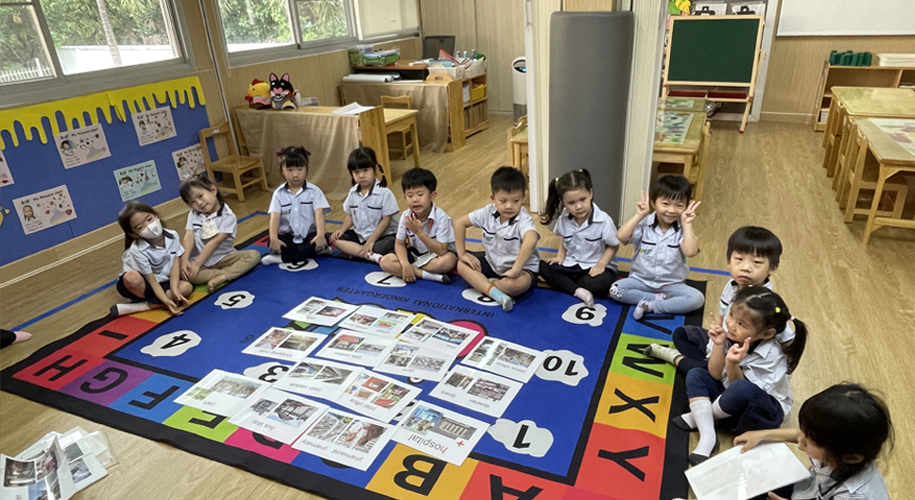
Phonics connects with several other areas of teacher training. When trainees learn about phonics, they are also drawing on their understanding of pronunciation, lesson planning, teaching young learners, classroom management, teaching resources, reading and assessment.
Knowing how blending works is subject knowledge. Explaining it clearly is teaching. Choosing an appropriate activity is lesson planning. Keeping 20 children engaged is classroom management. This is why we do not treat phonics as an isolated list of definitions.
► View the TEFL Course ► Level 5 CourseOur Level 5 TEFL course covers phonics as part of the wider preparation trainees receive for teaching English. The TQUK Level 5 qualification includes dedicated study of Teaching Pronunciation of English and Teaching English as a Foreign Language to Young Learners.
Trainees work with phonemes and graphemes, letter sounds, phonemic awareness, blending, segmenting, CVC words, digraphs, tricky words, decodable reading, pronunciation, word and sentence stress, intonation, connected speech and phonics activities.
The aim is to give a new teacher enough understanding to walk into a young learner classroom, recognise what they are being asked to teach and know how to start teaching it.
Real Teaching. Real Schools.